| DifficultyEasy | Total Time15 min | Prep Time15 min | Cook Time0 min |
| ServesN/A | Cost Per ServingN/A | CaloriesN/A | Recipe TypeGuide |
This Best Mixing Bowl Set guide helps you choose the perfect bowls for your kitchen needs and cooking style.
From stainless steel to glass options, the right mixing bowls make food prep easier and more efficient.
Why You’ll Love This Guide
- Complete Material Breakdown – Compare stainless steel, glass, ceramic, and plastic options.
- Size Selection Tips – Learn which bowl sizes work best for different cooking tasks.
- Feature Focus – Discover must-have features like non-slip bases and handles.
- Storage Solutions – Find space-saving nested sets perfect for small kitchens.
- Expert Recommendations – Get top picks for different cooking styles and budgets.
Best Mixing Bowl Set Selection Guide
Complete guide to choosing the perfect mixing bowl set for your kitchen.
What to Consider
- Material type – stainless steel, glass, ceramic, or plastic
- Bowl sizes – small (1-2 qt), medium (3-4 qt), large (5+ qt)
- Storage space in your kitchen
- Cooking and baking frequency
- Budget and durability needs
Selection Steps
- Assess your needs. Consider what you cook most often and how much space you have.
- Choose material. Pick stainless steel for durability or glass for versatility.
- Select sizes. Get at least three different sizes for maximum flexibility.
- Check features. Look for non-slip bases, handles, and nesting capability.
Best Mixing Bowl Set Guide
Quality mixing bowls are essential kitchen tools that make food prep easier and more efficient.
Materials Guide
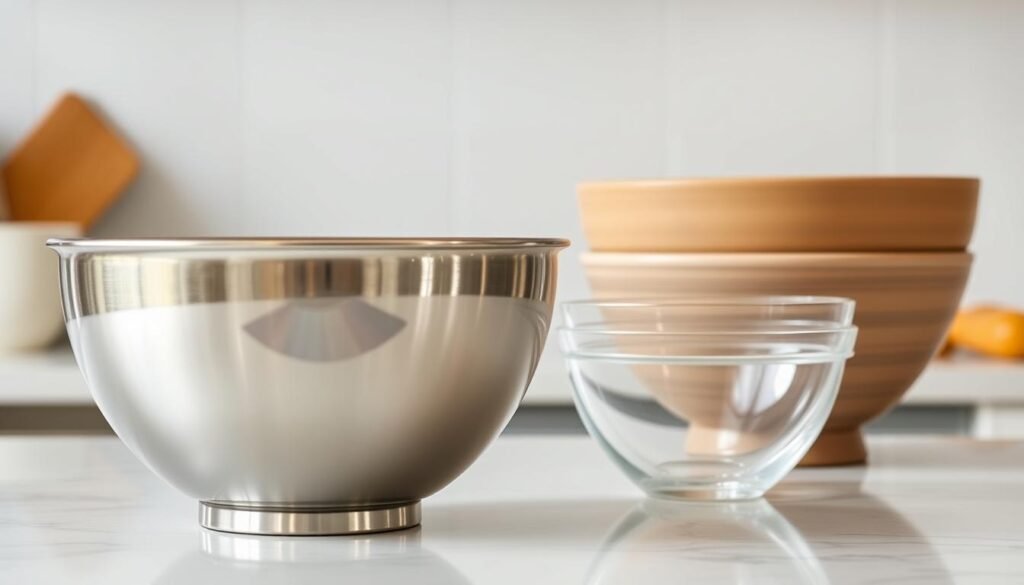
- Stainless steel – durable, lightweight, dishwasher safe
- Glass – microwave safe, non-reactive, easy to clean
- Ceramic – attractive, good for serving, retains temperature
- Plastic/silicone – lightweight, colorful, budget-friendly
Size Selection
- Small bowls (1-2 quarts) – prep work, dressings, beating eggs
- Medium bowls (3-4 quarts) – everyday mixing, salads, marinades
- Large bowls (5+ quarts) – baking, batch cooking, bread dough
- Extra large bowls (6+ quarts) – holiday baking, big families
Key Features
- Non-slip bases for stability during mixing
- Handles for better control and pouring
- Nesting design for compact storage
- Measurement markings for precision
- Lids for storage and rising dough
Material Selection Tips
Each material works best for different tasks.
- Choose stainless steel for durability and professional performance.
- Pick glass for microwave use and non-reactive mixing.
- Select ceramic for attractive serving and temperature retention.
- Go with plastic for lightweight portability and kids’ cooking.
Substitutions
Stainless steel – Glass or ceramic work well for most mixing tasks.
Large bowls – Use a clean pot or Dutch oven for big batches.
Non-slip base – Place a damp towel under regular bowls for stability.
Nested sets – Individual bowls work fine if you have storage space.
Tips and Variations
- Professional grade – Invest in heavy-duty stainless steel for serious baking.
- Color coding – Use different colored plastic bowls for raw and cooked foods.
- Temperature stability – Glass and ceramic hold cold temperatures longer for whipping cream.
- Multi-purpose – Choose sets that work as serving bowls too.
- Easy cleaning – Avoid bowls with tight crevices that trap food particles.
Material Notes
Stainless steel – Look for 18/8 or 18/10 grade for best corrosion resistance.
Glass – Tempered glass handles temperature changes better than regular glass.
Ceramic – Glazed ceramic is easier to clean than unglazed versions.
Plastic – BPA-free plastic is safer for food contact and storage.
Estimated Cost Per Set
- Basic plastic set (3 bowls) – ~$15.00
- Glass mixing bowl set (4 bowls) – ~$35.00
- Stainless steel set (5 bowls) – ~$45.00
- Premium ceramic set (4 bowls) – ~$65.00
- Professional grade stainless (6 bowls) – ~$80.00
Total range for quality sets: $15-$80 depending on material and bowl count.
Prices are estimates based on average US retail costs and will vary by brand and retailer.
How to Store and Care
Store nested sets together to save space and keep them organized. Clean immediately after use to prevent staining and odor absorption.
Wash with warm soapy water and dry thoroughly to prevent water spots on stainless steel. Check the FDA food storage guidelines for more detail.
What to Use With Your Mixing Bowl Set
Wire whisks and rubber spatulas work perfectly with most mixing bowl materials. Wooden spoons are gentle on all surfaces.
Stand mixers pair well with stainless steel bowls for professional results. Silicone scrapers help get every bit of batter from bowl walls.
Recommended Kitchen Gear
* As an Amazon Associate I earn from qualifying purchases at no extra cost to you.
Frequently Asked Questions
What are the benefits of using stainless steel mixing bowls?
Stainless steel mixing bowls are tough and don’t scratch or corrode. They’re also easy to clean and won’t react with acidic ingredients.
How do I choose the right size of mixing bowl for my needs?
Think about the recipes you make and how many people you serve. Small bowls (1-2 quarts) are great for prep, medium bowls (3-4 quarts) work for everyday mixing, and large bowls (5+ quarts) are best for baking and big batches.
What are the advantages of using glass mixing bowls?
Glass bowls are safe for acidic ingredients, easy to clean, and can go in the microwave and oven. They look nice and can serve food too.
Can I use ceramic mixing bowls for whipping cream or beating eggs?
Yes, you can use ceramic bowls for whipping or beating. But stainless steel or glass might be better because they’re more durable and easy to clean.
What are the benefits of using nested mixing bowls?
Nested bowls save space, which is great for small kitchens. They’re also handy for carrying and storing multiple bowls, making your best mixing bowl set more organized.
Want to save this for later? Pin it!