| DifficultyEasy | Total Time15 min | Prep Time5 min | Cook Time10 min |
| Serves1 Tool | Cost Per Serving~$15.00 | CaloriesN/A | Recipe TypeKitchen Tool |
This Kitchen Whisk Guide reveals why this simple tool is actually a secret weapon in every cook’s arsenal. From balloon whisks to French whisks, understanding the different types and their specialized uses can transform your cooking techniques.
Whether you’re making silky sauces, whipping perfect cream, or creating lump-free gravies, the right whisk makes all the difference in achieving professional results at home.
Why You’ll Love This Guide
- Comprehensive Coverage – Learn about every whisk type and its specific purpose in the kitchen.
- Professional Techniques – Discover the physics behind whisking and how to achieve perfect emulsions.
- Smart Selection Tips – Find out which materials and sizes work best for different cooking tasks.
- Maintenance Wisdom – Keep your whisks in top condition with proper care and storage methods.
- Hand vs Electric – Understand when to use manual whisking versus electric power for best results.
Kitchen Whisk Guide
Complete guide to selecting, using, and maintaining the perfect whisk for every cooking task.
Key Whisk Types
- Balloon whisk – general mixing and whipping
- French whisk – sauces and custards
- Flat whisk – deglazing and thick batters
- Ball whisk – deep containers
- Coil whisk – thick mixtures
- Cage whisk – milk frothing
Selection Steps
- Identify your needs. Consider what cooking tasks you do most often.
- Choose material. Stainless steel for durability, silicone for non-stick pans.
- Size appropriately. Match whisk size to your most common bowl and pan sizes.
- Test the grip. Ensure the handle feels comfortable for extended use.
Kitchen Whisk Guide Recipe
Understanding whisk types and their specific uses is the foundation of better cooking technique. Each whisk design serves a particular purpose in creating perfect textures and consistencies.
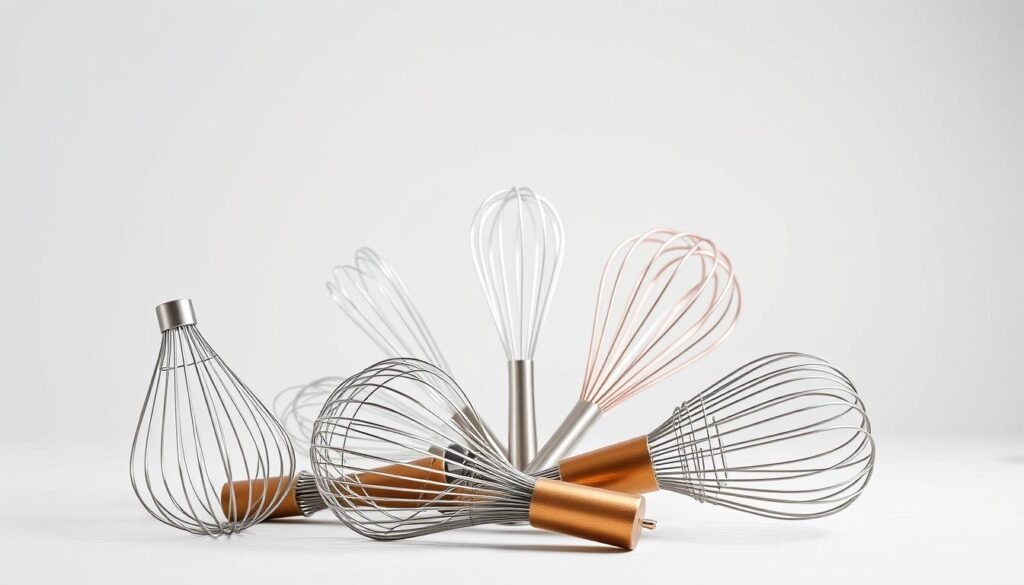
Essential Whisk Types
- Balloon whisk – 8-12 wire loops for general mixing and whipping cream
- French whisk – narrow shape with fewer wires for sauces in deep pans
- Flat whisk – paddle-like design for deglazing and scraping pan bottoms
- Ball whisk – weighted balls on wire ends for thick batters
- Coil whisk – spring-like design for dense mixtures
- Cage whisk – enclosed design for frothing milk in tight spaces
Selection Instructions
- Assess your cooking style. Identify which techniques you use most – mixing batters, making sauces, or whipping cream.
- Choose appropriate materials. Select stainless steel for durability or silicone for non-stick cookware compatibility.
- Match size to containers. Pick whisks that fit comfortably in your most-used bowls and pans.
- Consider handle comfort. Test grip and weight to ensure comfortable extended use.
- Plan for versatility. Start with a balloon whisk and flat whisk to cover most cooking tasks.
Research and Selection Times
- Research Time – 10 minutes
- Store Comparison – 15 minutes
- Total Selection Time – 25 minutes
Professional Whisking Technique Tips
Master these fundamental techniques for better cooking results.
- Use figure-8 motions for thorough mixing without overworking ingredients.
- Keep whisks at room temperature before use to prevent temperature shock in delicate mixtures.
- Start slowly and increase speed gradually when incorporating air into batters or cream.
- Clean whisks immediately after use to prevent food buildup in wire crevices.
Material Substitutions
Stainless Steel – Can substitute with copper for better heat conduction in sauce work.
Silicone – Nylon-coated whisks work similarly for non-stick surfaces.
Standard Handle – Ergonomic grips reduce hand fatigue during extended use.
Tips and Variations
- Storage Solutions – Hang whisks on hooks to prevent wire damage and allow air circulation.
- Multi-Size Sets – Keep small, medium, and large whisks for different container sizes.
- Specialty Applications – Use mini whisks for small batches of salad dressing or spice blends.
- Electric Alternatives – Hand mixers work well for large batches but lack the control of manual whisking.
Material and Design Notes
Wire Count – More wires create finer incorporation but require more effort to clean.
Handle Length – Longer handles provide better leverage for thick mixtures and deep containers.
Wire Thickness – Thicker wires last longer but create less delicate mixing action.
Joint Construction – Welded joints are stronger than crimped connections for heavy-duty use.
Estimated Cost Per Serving
- Basic balloon whisk – ~$8.00
- French whisk – ~$12.00
- Flat whisk – ~$15.00
- Specialty whisks – ~$10.00 each
Total starter set cost: ~$45.00 – lasting 10+ years with proper care.
Prices are estimates based on average US kitchen store costs and will vary by location and brand.
How to Store and Maintain
Store whisks in a dry utensil holder or hang them on hooks to prevent wire damage. Keep them separated from other utensils to maintain their shape.
Clean whisks immediately after use with warm soapy water, paying attention to wire joints where food can collect. Check the FDA food storage guidelines for kitchen tool safety standards.
What to Use With This Kitchen Whisk
Whisks work best with mixing bowls that have rounded bottoms and sufficient depth. Stainless steel or glass bowls provide the best results for temperature-sensitive preparations.
Pair your whisk with quality measuring cups and a kitchen scale for precise ingredient ratios. A good cutting board and sharp knives complete the essential prep tool collection.
Recommended Kitchen Gear
* As an Amazon Associate I earn from qualifying purchases at no extra cost to you.
Frequently Asked Questions
What is the best type of whisk for general mixing tasks?
A balloon whisk is great for mixing. It works well with batters and sauces due to its rounded wire design that incorporates air effectively.
How do I choose the right material for my whisk?
Think about what you need. Stainless steel whisks are strong and don’t rust, while silicone whisks are good for non-stick pans and can handle heat up to 400 degrees F.
Can I use a hand whisk for whipping heavy cream or eggs?
Yes, you can use a hand whisk for whipping, but it might take more time and effort than an electric whisk. Hand whisking gives you better control over texture development.
What are the benefits of using a flat whisk for deglazing pans?
A flat whisk is perfect for deglazing pans because its shape helps scrape the pan bottom effectively, getting all the tasty browned bits into your sauce.
How do I properly clean and maintain my whisk?
Clean your whisk with soap and warm water immediately after use. Dry it well to avoid rust or bacteria, and check it often for wear. Store in a dry place to extend its life.
Are electric whisks worth the investment for home cooks?
Electric whisks are great for home cooks who frequently make large batches or heavy mixtures. They’re perfect for whipping meringues or whipped cream but lack the precision control of manual whisking.
What makes a kitchen whisk such an essential cooking tool?
A kitchen whisk is essential because it performs multiple functions that other tools cannot replicate – creating emulsions, incorporating air, eliminating lumps, and providing precise control over mixing intensity.
Want to save this for later? Pin it!